Back to News  When it comes to roofing, the difference between hip and gable roof styles is not just about aesthetics but also about functionality and suitability. Superior Roofing is here to guide you through understanding these common types of roofs, helping you make an informed decision for your home. Recognizing the most popular roof styles and their compatibility with various building materials is essential in choosing the right roof for your property.

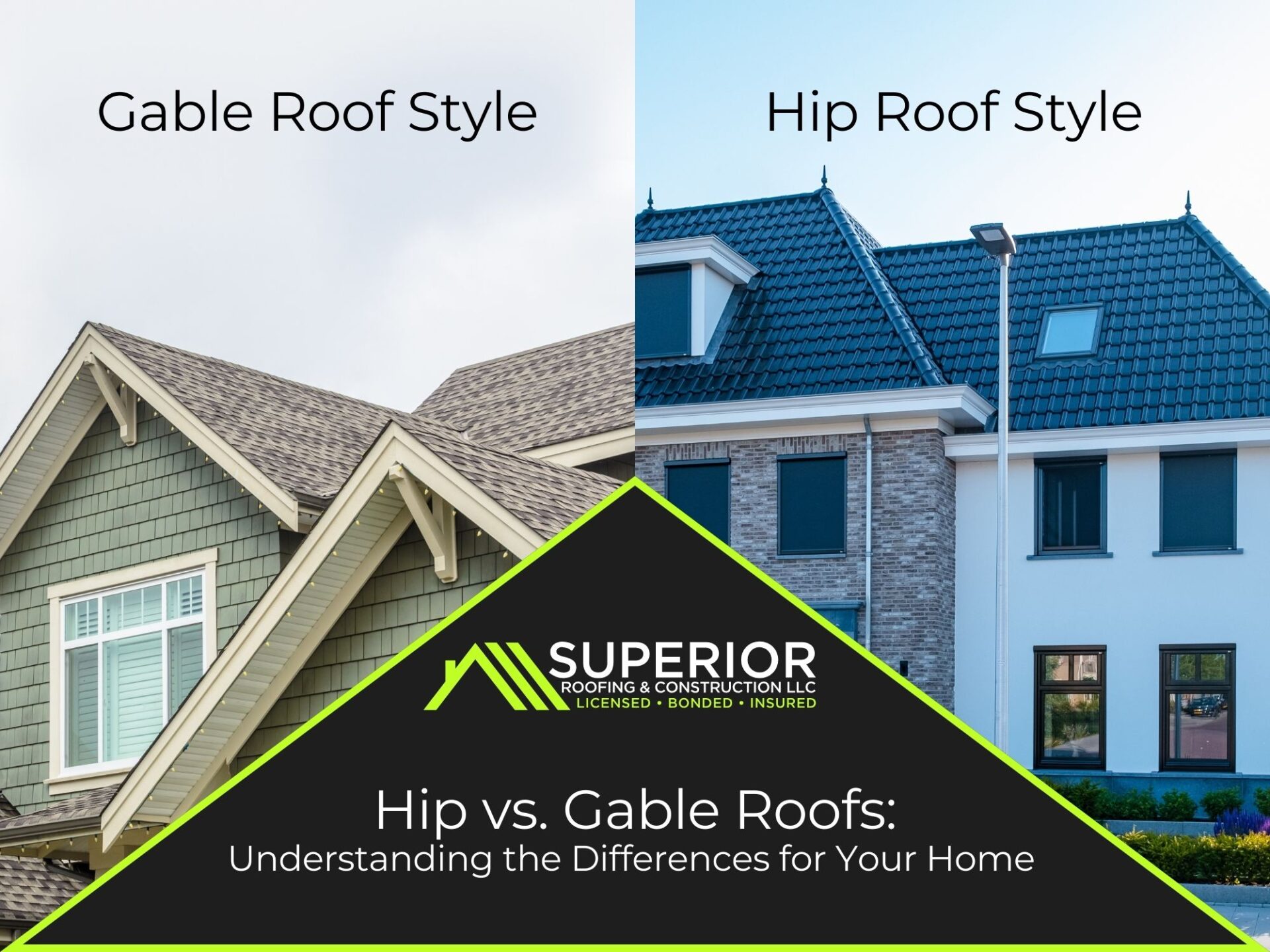
 A gable roof, recognized by its triangular shape, consists of two sloping sides that meet at a ridge to create a peaked roof. This design is prevalent due to its simplicity and effectiveness in shedding water and snow. Gable roofs provide more attic space and are often more cost-effective than hip roofs.

 A hip roof, also known as a pavilion roof, features slopes on all four sides that come together at the top. This design offers excellent stability and resistance to high winds. Hip roofs, or hipped roofs, are ideal for regions with severe weather conditions. They often have less attic space but provide a uniform and neat appearance.


 Combining hip and gable roofs can result in a cross-gabled roof or a Dutch gable roof, offering both aesthetic appeal and functional benefits. This combination allows for more complex designs, enhancing the architectural interest and curb appeal of your home.

Hip vs. Gable Roofs: Understanding the Differences for Your Home
December 8, 2023
When it comes to roofing, the difference between hip and gable roof styles is not just about aesthetics but also about functionality and suitability. Superior Roofing is here to guide you through understanding these common types of roofs, helping you make an informed decision for your home. Recognizing the most popular roof styles and their compatibility with various building materials is essential in choosing the right roof for your property.
Gable vs Hip Roof
Gable Roofs: The Classic Choice
A gable roof, recognized by its triangular shape, consists of two sloping sides that meet at a ridge to create a peaked roof. This design is prevalent due to its simplicity and effectiveness in shedding water and snow. Gable roofs provide more attic space and are often more cost-effective than hip roofs.
Hip Roofs: The Four-Sided Solution
A hip roof, also known as a pavilion roof, features slopes on all four sides that come together at the top. This design offers excellent stability and resistance to high winds. Hip roofs, or hipped roofs, are ideal for regions with severe weather conditions. They often have less attic space but provide a uniform and neat appearance.
Difference Between Hip and Gable Roof Styles: Pros & Cons
Choosing between a hip roof and a gable roof involves understanding the advantages and disadvantages of these common roof styles. Simple hip roofs, known for their uniform and sturdy design, contrast with the distinctive gable roof lines that offer a classic and straightforward structure.Gable Roof Benefits and Disadvantages
Hip Roof Benefits and Disadvantages
Hip and Gable Roof Combination: Best of Both Worlds?
Combining hip and gable roofs can result in a cross-gabled roof or a Dutch gable roof, offering both aesthetic appeal and functional benefits. This combination allows for more complex designs, enhancing the architectural interest and curb appeal of your home.
Hip Roof and Gable Roof Combination Benefits and Disadvantages