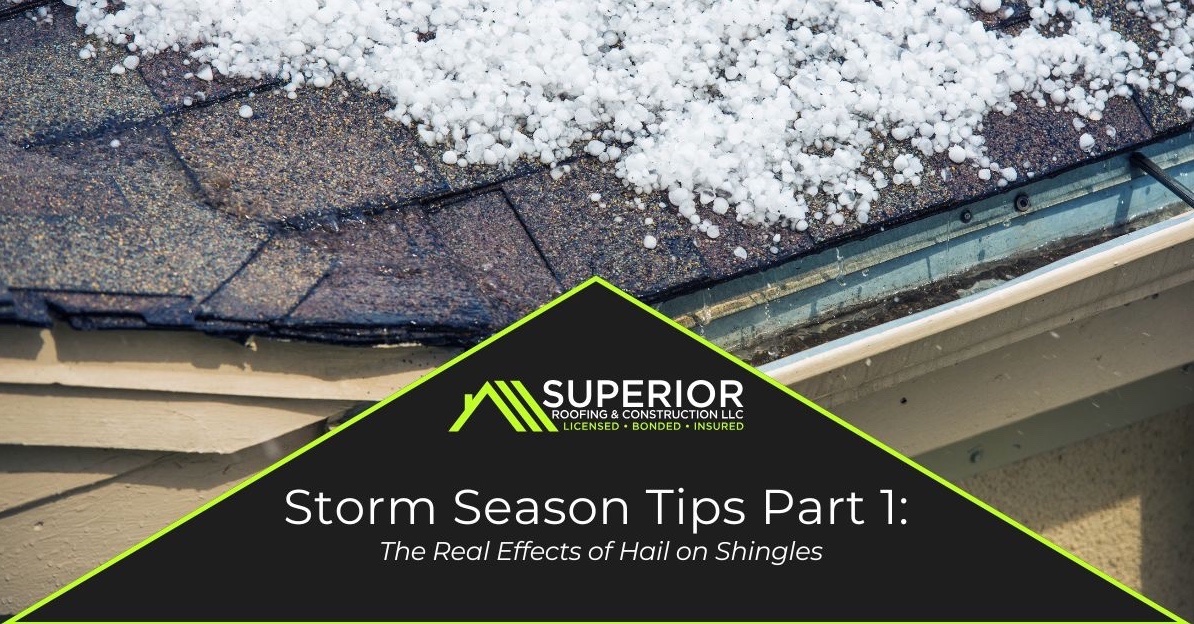
Storm Season Tips Part 1: The Real Effects of Hail on Shingles
Around here, storm season isn’t an abstract idea—it’s real thunder, real hail, and real nights spent watching the radar instead of sleeping. As local roofers, we see what those storms do to shingles and to homeowners’ peace of mind. This first part of our Storm Season Tips for Homeowners & Their Roofs series digs into the effects of hail on shingles and what to look for after a storm.
When the weather rolls through, most people ask two questions: “What does hail damage look like on a roof?” and “Is your roof hail storm ready, or are we one big storm away from trouble?” We want to help answer both honestly, without panic and without guesswork.
What Hail Really Does to Shingles
Not all hail is the same, and not all damage looks dramatic from the ground. Small hail can bruise shingles; large hail can break them. When we’re on a roof after a storm, here’s what we often find:
Dark “bruises” or spots where granules are knocked off, exposing the asphalt underneath.
Soft areas you can feel underfoot or by touch, like a bruise on an apple.
Cracks or fractures in shingles where hail hit hard and sharp.
Dents in metal components—vents, flashing, gutters—that tell the story of how hard the roof was hit.
The tricky part? From the yard, your roof might still “look fine.” Hail damage is often subtle and easy to miss until months later when those bruised spots age faster, granules wash into gutters, and leaks begin to show up in ceilings or around light fixtures.
What Does Hail Damage Look like on a Roof—For Real Homeowners?
For homeowners, hail damage usually shows up in small, everyday ways:
You notice more granules than usual in your gutters or at downspouts after a storm.
You spot a few shingles that seem darker, smoother, or more “bald” in spots.
You see dents in your mailbox, outdoor AC unit, or metal trim and start to wonder about the roof.
If you’re asking yourself, “What does hail damage look like on a roof?” the safest answer is: it looks like something a trained eye should check up close. You don’t need to climb a ladder or walk the roof yourself—that’s what we’re here for—but you can pay attention to those small signs and call when something doesn’t feel right.
Is Your Roof Hail-Storm Ready?
Being “hail storm ready” isn’t about having a perfect roof; it’s about having a roof that still has enough life, integrity, and proper installation to take a hit and keep doing its job. A hail storm ready roof typically has:
Shingles that aren’t already brittle, curled, or at the end of their lifespan.
Secure flashing and ridge caps that won’t lift or crack under wind-driven hail.
Good ventilation, which helps shingles age more evenly and stand up better over time.
If your roof is already tired—missing shingles, repeated patches, visible wear—every hailstone has a better chance of turning a manageable issue into a major problem.
How We Help You Move from Worry to Action
We live under the same skies you do. When a big storm hits, we’re not just thinking about jobs—we’re thinking about our neighbors, schools, and the families we’ve met on front porches over the years.
Here’s what we encourage homeowners to do after a hail storm:
Walk your property safely from the ground. Look at gutters, downspouts, siding, and outdoor equipment for dents or damage.
Take photos of anything unusual, even if you’re not sure it’s important.
Call a trusted local roofer for a honest assessment—not just someone chasing storms.
When we come out, our goal isn’t to scare you into a replacement. It’s to tell you the truth: whether your roof is still hail storm ready, needs repairs, or is at the point where a new roof is the wiser, long-term choice.
The storm season will always come. Our job at Superior Roofing is to make sure you feel less alone when it does—and to help your roof quietly do its job while life inside your home keeps going. Contact us today!