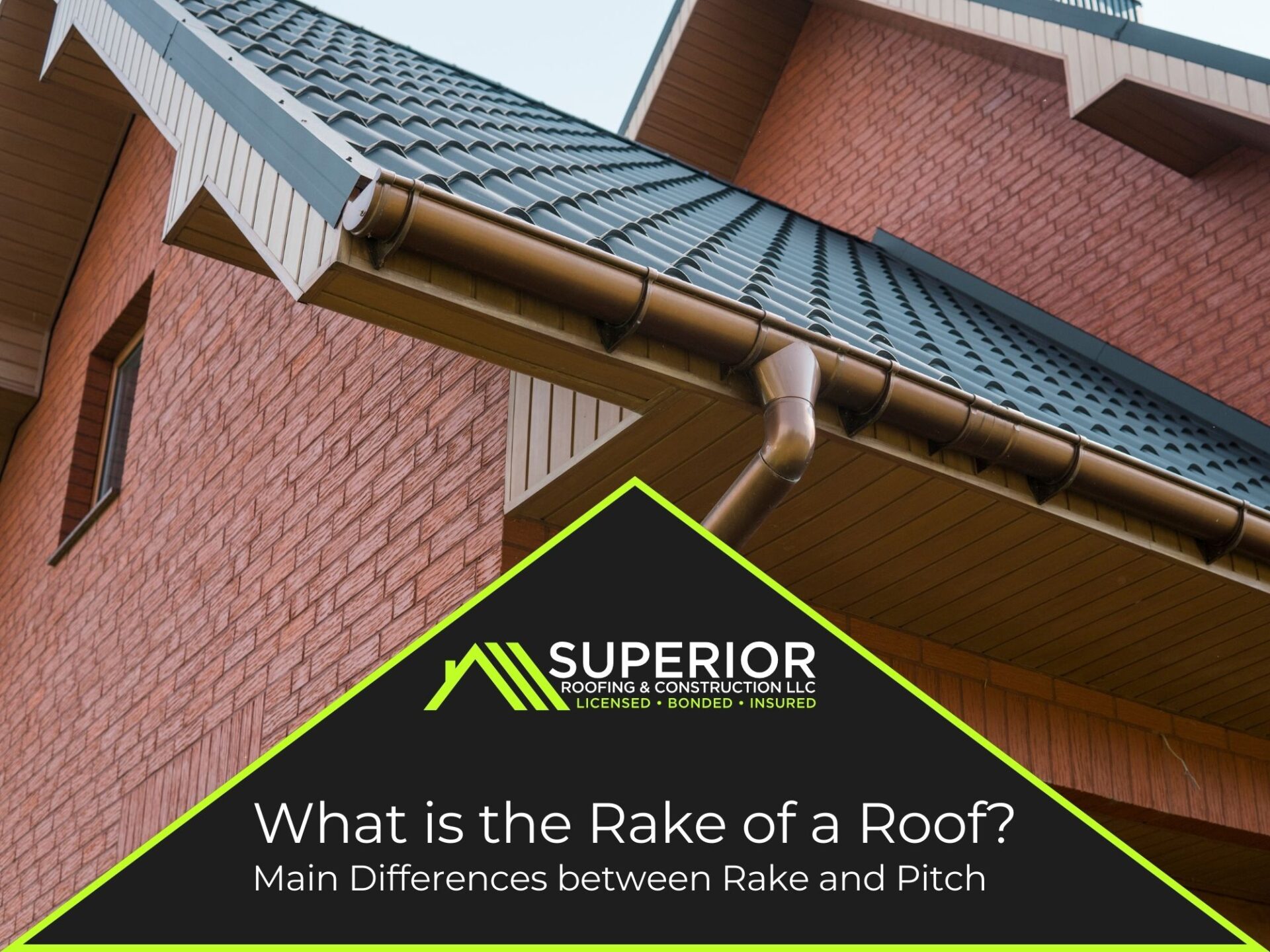
Back to News  Understanding the rake of a roof is essential for homeowners and roofing professionals alike. The rake refers to the overhanging area of the roof from the ridge to the eave, and it can have significant implications for a home's energy efficiency, curb appeal, and resale value.
What is the Rake of a Roof?
October 10, 2023
Understanding the rake of a roof is essential for homeowners and roofing professionals alike. The rake refers to the overhanging area of the roof from the ridge to the eave, and it can have significant implications for a home's energy efficiency, curb appeal, and resale value.
What is Roof Pitch vs. Rake?
First and foremost, it's important to understand that a roof pitch and rake are related but different concepts. Roof pitch refers to the angle of the roof's slope, measured as the ratio of the rise (height) to the run (horizontal distance). Roof rake, on the other hand, refers specifically to the slope of the roof from the ridge to the eave. This creates an overhang to further protect the house structure from the elements, similar to the eave. While both factors can affect the overall design and functionality of a roof, they are not interchangeable terms. The rake can vary depending on the style of the roof, with gabled roofs typically having a steeper rake than hip roofs. Again the main differences are:-
- Roof Pitch (calculation of distance between the top and bottom of the roof): How steep the roof rises from the outside wall to the roof ridge, normally expressed as a fraction such as 4/12
-
- Roof Ridge (the top): The peak of the roof
-
- Roof Eave (the bottom): The horizontal overhang created by oversized trusses, which cause the roof to extend past the walls
-
- Roof Rake (the sides): The rising overhang which follows the pitch from eave to ridge